

In the high-stakes world of competitive gaming, your eyes only tell half the story. The other half belongs to your ears. As we move through 2026, the Best Gaming Headset is no longer just a pair of speakers on your head; it is a sophisticated spatial awareness tool. Whether you are listening for the faint sound of a reload in Counter-Strike or the distant rumble of an engine in Forza, having the Best Gaming Headset is what allows you to react before your opponent even appears on your screen.
Choosing the Best Gaming Headset involves balancing three critical pillars: audio fidelity, microphone clarity, and long-term comfort. With the arrival of AI-driven noise cancellation and ultra-low latency wireless protocols, 2026 has been a landmark year for audio gear. This guide provides an actionable breakdown of the top headsets on the market, ensuring you find the perfect pair for your platform and budget. If you are looking to upgrade your entire communication chain, don’t forget to check our guide on the Best Gaming Mic as well.
1. Top 5 Best Gaming Headset Rankings for 2026
We have selected these picks based on “Action Needs” to help you choose the right tool for your specific gaming style.
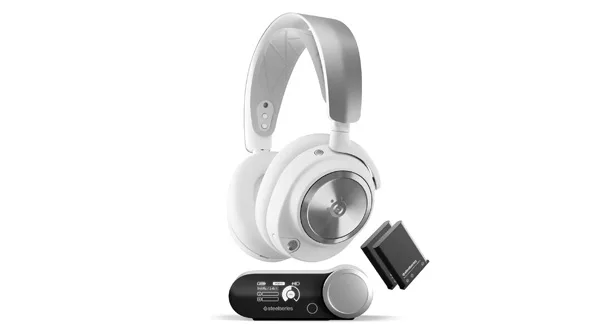
1. The Overall Performance King: SteelSeries Arctis Nova Pro Wireless
This is widely considered the Best Gaming Headset for the elite gamer. It features a unique hot-swappable battery system, meaning you never have to plug it in to charge.
Action Feature: The included GameDAC acts as a command center, allowing you to mix your game and chat audio without leaving your game.
Best For: Multi-platform gamers who play on both PC and Console.
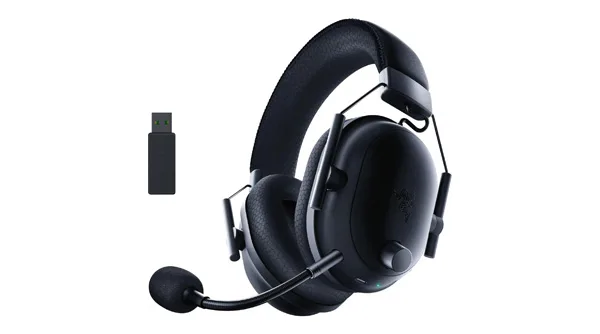
2. The Competitive FPS Standard: Razer BlackShark V2 Pro (2026 Edition)
If your only goal is hearing footsteps, this is the Best Gaming Headset. It is famous for its “flat” sound profile that emphasizes the frequencies where footsteps and reloads live.
Action Feature: The 2026 model includes a pro-grade wideband microphone that rivals many standalone USB mics.
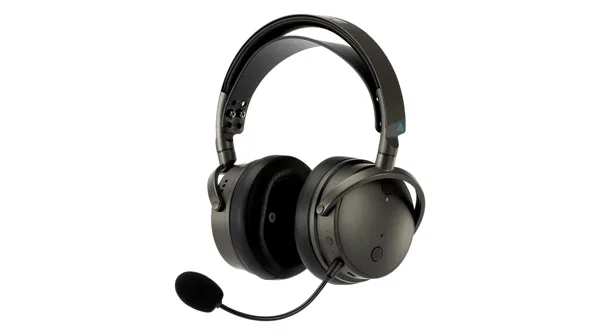
3. The Audiophile Choice: Audeze Maxwell
For those who care about music as much as gaming, the Maxwell is the Best Gaming Headset. It uses planar magnetic drivers which provide a level of detail and bass accuracy that standard headsets cannot match.
Action Feature: Built-in Dolby Atmos license for the most immersive spatial audio experience available today.
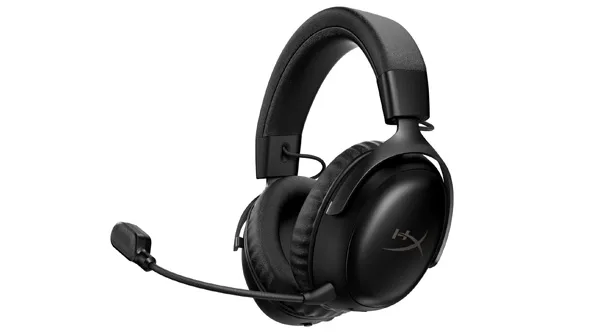
4. The Budget Value Hero: HyperX Cloud III
On a budget? The Cloud III remains the Best Gaming Headset for under 100 dollars. It is built like a tank with a full metal frame and features the most comfortable memory foam ear pads in the industry.
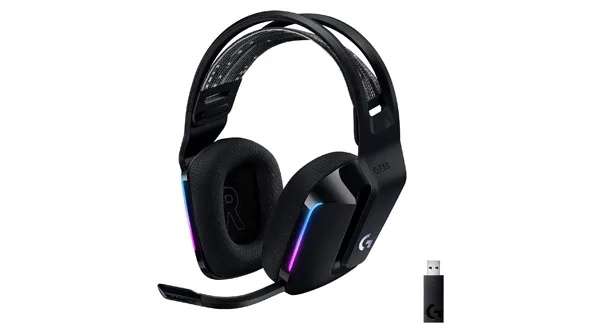
5. The Lightweight Wireless Pick: Logitech G733
If you hate heavy gear, this is the Best Gaming Headset. It is incredibly light and uses the Lightspeed wireless protocol for zero-lag performance.
If you love the Logitech ecosystem, pair this with the Best Logitech Gaming Mouse for a unified setup.
2. Wireless vs Wired: Is Latency Finally Fixed?
When searching for the Best Gaming Headset, the biggest debate is the wire. In 2026, wireless technology has reached a point where the human ear cannot detect the delay.
The 2.4GHz Advantage: Unlike standard Bluetooth which has a massive delay, the Best Gaming Headset models use a dedicated 2.4GHz USB dongle. This provides a “pipe” that is fast enough for pro-level play.
The Jitter Connection: While your headset might be fast, your game can still feel “off” if your network is unstable.
To ensure your audio and your gameplay stay perfectly synced, check our guide on What is the Best Latency for Gaming? to fix your network jitter.
3. Understanding Soundstage: Open-Back vs Closed-Back
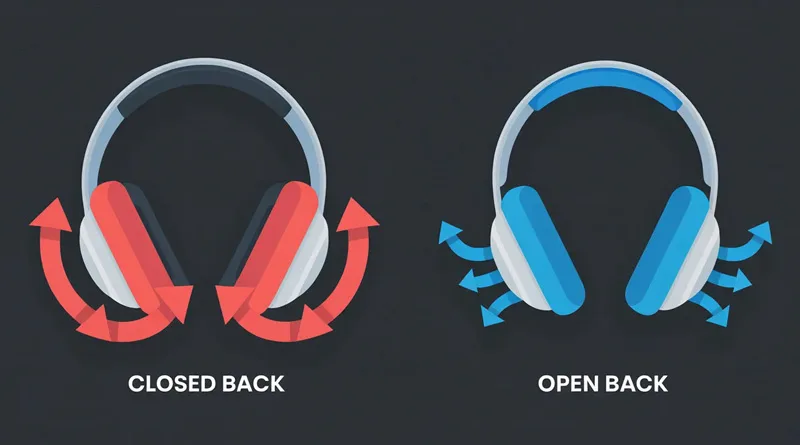
Not all the Best Gaming Headset options are built the same way. You must choose based on your environment.
Closed-Back (The Standard): Most gaming headsets are closed. They have solid plastic earcups that block out the noise of your PC fans or your family. They provide “punchy” bass and total isolation.
Open-Back (The Pro Choice): These have mesh earcups that let air and sound pass through. The Best Gaming Headset for “Soundstage” is always an open-back model. It makes the game feel like the sound is coming from the room around you, rather than inside your head. This is incredibly helpful for horizontal and vertical footstep tracking.
4. Comfort and Clamping Force: The Weight Gaming Rule
You can buy the most expensive pair on the list, but if they hurt your head after 30 minutes, they aren’t the Best Gaming Headset for you.
The Clamping Force: A headset needs to stay on your head, but too much pressure causes headaches. We recommend looking for headsets with adjustable suspension headbands.
Ear Pad Material: In 2026, “Cooling Gel” pads have become standard. They prevent your ears from sweating during the summer months.
Physical comfort is a performance requirement. See our 7 essential rules for a pain-free setup in the Weight Gaming Ergonomics Guide.
5. Software and Spatial Audio: The 2026 Edge
The secret weapon of the Best Gaming Headset is the software. In 2026, “Object-Based Audio” allows you to hear exactly where an enemy is in a 3D space.
Step 1: Download your headset’s specific software (Logitech G Hub, SteelSeries GG, or Razer Synapse).
Step 2: Enable a spatial audio protocol like Windows Sonic, Dolby Atmos, or DTS Headphone:X.
Step 3: Use a custom “FPS EQ” profile to boost the 2kHz to 4kHz range, which highlights the sound of footsteps.
Conclusion: Take Action on Your Audio Presence
The Best Gaming Headset of 2026 is an investment in your competitive rank and your immersion. Don’t settle for the mediocre speakers inside your monitor or a worn-out pair of earbuds. By moving to a dedicated gaming headset with spatial audio and a low-latency wireless connection, you gain a massive advantage over the competition.
Choose the pair that fits your budget, calibrate your EQ settings, and listen to the difference for yourself. For more on the hardware that completes your pro station, see our review of the Best 1440p Gaming Monitor.