
When building or upgrading a gaming PC, the choice of your Central Processing Unit (CPU) is paramount. Among the most popular and often debated options is Intel’s i5 Core series. For years, the question has lingered: is i5 Core good for gaming? In 2025, with rapidly evolving game requirements and new generations of Intel processors, this question is more relevant than ever. This comprehensive guide will dissect the performance of Intel’s i5 processors, compare them to i3 and i7/i9 counterparts, and help you determine if an i5 is the right heart for your gaming rig.
The CPU is often referred to as the “brain” of your computer, responsible for processing all the instructions from your games and applications. While the GPU (Graphics Processing Unit) handles the heavy lifting of rendering graphics, a powerful CPU ensures smooth gameplay by managing game logic, AI, physics, and preparing frames for the GPU. A weak CPU can create a “bottleneck,” meaning even a top-tier graphics card won’t be able to perform at its full potential. So, understanding if an i5 Core is good for gaming is crucial for a balanced and high-performing system. For a complete look at all the essential components that make up a powerful gaming PC, be sure to visit our pillar guide: The Ultimate Guide to the Best Gaming PCs: Build, Buy & Optimize Your Rig.
Understanding the Intel i5 Core Series
Intel’s Core i5 line typically sits in the mid-range of their processor offerings, positioned above the budget-friendly i3 and below the high-performance i7 and enthusiast i9 series. Over the years, Intel has continuously refined the i5, increasing core counts, clock speeds, and introducing new architectures. Modern i5s usually feature a combination of Performance-cores (P-cores) and Efficient-cores (E-cores), a hybrid architecture designed to optimize both gaming performance and background task efficiency.
The key question for gamers remains: is i5 Core good for gaming given these advancements? The answer, for most gamers, is a resounding yes. Modern i5 processors, particularly from the last few generations, offer an excellent balance of raw single-core speed (critical for many games) and sufficient multi-core performance to handle background tasks and increasingly multi-threaded game engines.
Key Features of Modern i5 Processors:
- Core Count: Typically 6 P-cores and 4-8 E-cores in recent generations (e.g., 12th, 13th, 14th Gen). This provides ample threads for modern games.
- Clock Speed: High boost clock speeds on the P-cores ensure strong performance in single-threaded gaming scenarios.
- Intel Turbo Boost Technology: Dynamically increases clock speed when needed.
- Integrated Graphics (optional): Many i5 models include integrated graphics (e.g., Intel UHD Graphics), which can be useful for troubleshooting or non-gaming tasks, though a dedicated GPU is always recommended for gaming.
- Price-to-Performance: Historically, i5s have offered some of the best price-to-performance ratios for gamers, making them a smart choice for balancing budget and frame rates.
i5 Core Good for Gaming? Performance Benchmarks
To truly evaluate “is i5 Core good for gaming,” it’s crucial to look at how these processors perform in real-world gaming scenarios. Generally, current generation i5 processors (like the 13th Gen i5-13600K or 14th Gen i5-14600K) deliver excellent frame rates across a wide variety of titles, making them a strong contender for any gaming build.
- AAA Titles (e.g., Cyberpunk 2077, Starfield, Call of Duty: Warzone): Modern i5s can push high frame rates, often matching or coming very close to their i7 counterparts, especially at 1440p or 4K resolutions where the GPU becomes the primary bottleneck. At 1080p, where the CPU has more influence, the i5 still holds its own, providing smooth gameplay.
- Esports Titles (e.g., Valorant, CS2, League of Legends): For competitive gaming where very high frame rates (144Hz+) are desired, an i5 is typically more than capable of achieving and maintaining these targets, as these games are generally less CPU-intensive.
- Multi-threaded Games: As game engines evolve to utilize more CPU cores, the hybrid architecture of modern i5s with their P-cores and E-cores is proving increasingly beneficial, ensuring no major hitches during intense gameplay.
When an i5 Shines:
- Dedicated Gaming Rigs: If your primary use is gaming, an i5 offers fantastic value.
- High Refresh Rate Gaming: Paired with a capable GPU, an i5 can easily drive 144Hz+ monitors.
- Streaming (Single PC Setup): While an i7 or i9 provides more overhead, a modern i5 (especially with good core count) can handle gaming and streaming simultaneously, particularly if you use your GPU’s encoder (NVENC for NVIDIA, AMF for AMD).
i5 vs. i3, i7, and i9 for Gaming
When comparing Intel’s processor lineup, a common question arises: is i5 Core good for gaming compared to its more budget-friendly i3 counterparts? The short answer is yes, with significant advantages.
i5 vs. i3 Core for Gaming
- i3 (Entry-Level): While modern i3s are much more capable than older generations, they typically have fewer P-cores and lower overall thread counts.
- Gaming Performance: An i3 can handle many games, especially at 1080p, but it’s more prone to bottlenecks and stuttering in demanding AAA titles or when multitasking. It’s best for budget builds or very casual gaming.
- Recommendation: For dedicated gamers, the incremental cost to step up to an i5 is usually well worth the significant performance and longevity benefits.
i5 vs. i7/i9 Core for Gaming
Many aspiring PC builders wonder, “is i5 Core good for gaming when stacked against the high-end i7 and i9 processors?” While i7s and i9s offer peak performance, an i5 often provides comparable gaming experiences at a better value.
- i7/i9 (High-End/Enthusiast): These processors offer higher core counts (more P-cores and E-cores), more cache, and often slightly higher clock speeds. They excel in highly multi-threaded workloads.
- Gaming Performance: In many games, the frame rate difference between a top-tier i5 and an i7 or i9 is surprisingly small, especially at higher resolutions where the GPU is the limiting factor. The primary gains for i7/i9 are in minimum frame rates (smoother experience) and in specific, heavily CPU-bound scenarios.
- Multitasking & Content Creation: Where i7/i9 truly pull ahead is in professional workloads like video editing, 3D rendering, heavy streaming with CPU encoding, or running multiple virtual machines. The extra cores and threads provide a substantial advantage here.
- Recommendation: If your budget allows and you also do heavy content creation or demanding professional work alongside gaming, an i7 or i9 is a justifiable upgrade. For pure gaming, a high-end i5 paired with a powerful GPU often offers better overall value.
Factors to Consider When Choosing an i5 for Gaming
Beyond just the “i5” label, several factors impact whether a specific i5 Core is good for gaming.
- Generation: Always aim for the newest possible generation within your budget (e.g., 14th Gen > 13th Gen > 12th Gen). Each generation brings architectural improvements, higher efficiency, and better performance.
- “K” or “KF” Models: These indicate unlocked processors that can be overclocked (K) or unlocked without integrated graphics (KF). If you plan to overclock for extra performance, these are essential. Non-K models are usually cheaper but cannot be manually overclocked.
- Core & Thread Count: Look for i5s with a healthy number of P-cores and E-cores (for hybrid architectures). More threads mean better handling of multi-tasking and future games.
- Cache Size: More L2 and L3 cache generally means faster data access for the CPU, leading to better performance.
- Motherboard Compatibility: Intel CPUs use specific sockets (e.g., LGA1700 for 12th-14th Gen). Ensure your chosen i5 is compatible with your motherboard. Also, consider the chipset; Z-series motherboards are needed for K-series CPUs and overclocking.
- Cooling: While i5s are generally easier to cool than i7s or i9s, a good aftermarket CPU cooler (air or AIO liquid) is highly recommended, especially for K-series chips or sustained heavy workloads.
- RAM: Your CPU’s performance is also influenced by your RAM. A fast i5 benefits from fast, dual-channel RAM. For more details, check out our guide: How Much RAM Do I Need for Gaming? 8GB, 16GB, 32GB Explained.
Recommended i5 Processors for Gaming (Current Generation)
As of 2025, if you’re asking is i5 Core good for gaming, here are a couple of top recommendations from recent Intel generations:
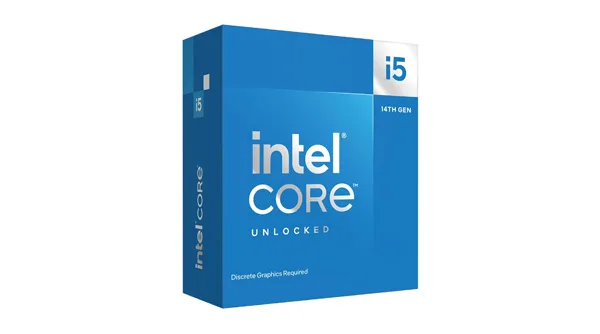
- Intel Core i5-14600K / KF (14th Gen “Raptor Lake Refresh”):
- Why: This is currently one of the best value gaming CPUs on the market. It offers 6 P-cores and 8 E-cores (20 threads total), high boost clocks, and exceptional single-core performance. It handles virtually all games with ease and provides strong performance for mixed-use scenarios (gaming + streaming/browsing). The ‘K’ version is unlocked for overclocking.
- Our Top Pick : Intel Core i5-14600KF Desktop Processor (24M Cache, up to 5.3 GHz) (or the ‘K’ version with integrated graphics if preferred)
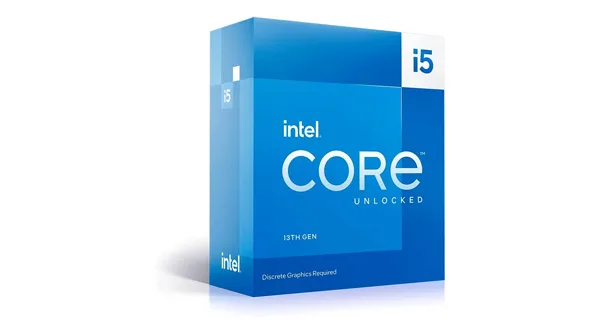
- Intel Core i5-13600K / KF (13th Gen “Raptor Lake”):
- Why: Still an absolute powerhouse and often available at a slightly reduced price compared to the 14th Gen, offering incredible value. It boasts the same core configuration as the 14600K and very similar gaming performance. If you find a good deal on this, it’s an excellent choice.
- Our Top Pick: Intel Core i5-13600KF Desktop Processor (24M Cache, up to 5.1 GHz)
Conclusion: So, Is i5 Core Good for Gaming?
In conclusion, is i5 Core good for gaming? Absolutely, yes. For the vast majority of gamers, a modern Intel Core i5 processor provides an exceptional balance of price, performance, and features. It delivers high frame rates in the latest AAA titles, easily handles competitive e-sports, and allows for comfortable multitasking. While i7 and i9 offer more raw power for professional content creation and extreme multi-tasking, the i5 often provides nearly identical gaming performance at a significantly lower cost.
If your primary goal is to build a powerful gaming PC without breaking the bank, pairing a current-generation i5 with a strong graphics card and sufficient fast RAM will deliver an outstanding gaming experience for years to come.